
Civil Engineering
Products
Civil Engineering
- Explore our extensive selection of high-quality civil engineering grouts, designed to meet specific requirements. From structural support to precision filling, our advanced grouts ensure durability and reliability for all your construction projects. Ideal for professionals seeking efficient and effective solutions. These grouts also support specialised applications such as concrete pavement repair, giving professionals dependable solutions for demanding site conditions.

Products in Civil Engineering
-

ARDEX CE 460
GRP Continously Threaded Bar
- High durability and corrosion resistant
- High tensile and shear strength
-

ARDEX CE 501
Segmental Bonding Adhesive
- Excellent adhesion to concrete
- High initial and ultimate strength
-

ARDEX CE 511
GP Non-shrink Grout
- Class C grout
- Dual shrinkage control
-

ARDEX CE 580
Rapid Setting High Strength Grout
- Shrinkage compensated
- Excellent fluidity
-

ARDEX CE 750
Rapid Setting High Build Repair Mortar
- High early strength
- Low shrinkage class C shrinkage compensated
-

ARDEX CE 828
Structural Micro Concrete
- High Flexural and Compressive Strength
- Dimensional stable
-

ARDEX CE 910
Rapid Curing Semi-Rigid Pavement Grout
- Shrinkage compensated
- High flexural and compressive strength
-
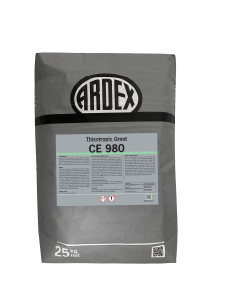
ARDEX CE 980
Thixotropic Grout
- Gravity resistant
- Long pump life
-

ARDEX CE 901 Post Tensioning Grout
Ultra Flow PT Grout
- Ultra-fluidity
- Rapid strength gain
-

ARDEX CE 902
Ultra Flow PT Grout Additive
- Extended working time – allows long distance pumping
- No formation of hydrogen gas
-

ARDEX CE 707
Sprayable High Build Shotcrete
- Highly durable, microsilica-modified
- High build – up to 300mm thick in one pass
-

ARDEX CE 826
Rapid Curing Structural Micro Concrete
- Shrinkage compensated
- Rapid cure – Trafficable in 2-3 hours
-

ARDEX CE 601
High Strength Coloured Coating
- Excellent anti-skid resistance
- For internal and external applications
ARDEX has developed a comprehensive range of technically advanced civil engineering solutions for your specific needs. We work closely with structural engineers, contractors, and developers to create value for your projects. Our in-house technical support and know-how will ensure that our products are correctly installed to save you time and money. They are equally suited for applications involving concrete pavement repair, where consistent performance and dependable bonding are crucial.
What Is Civil Engineering
Civil engineering focuses on designing, constructing, and maintaining the built environment that supports everyday life. It covers large-scale infrastructure such as roads, bridges, tunnels, drainage systems, and public utilities. The discipline combines science, materials knowledge, and engineering principles to ensure structures remain safe, resilient, and durable over long periods.
Civil engineers play a central role in planning how these systems function, assessing site conditions, and selecting construction methods that meet performance and sustainability requirements.
Understanding Concrete Pavement Repair
Concrete pavements experience continual stress from traffic, weather, and ground movement. Over time, these pressures cause defects that reduce structural integrity and surface performance. Repair work restores strength, improves usability, and prolongs the pavement’s service lifespan. Below are key considerations that guide concrete pavement repair work.
Identifying The Source Of Deterioration
Effective repair starts with determining what caused the damage, whether it is load-related stress, moisture intrusion, or ageing materials. Clear diagnosis ensures the selected repair method is appropriate and long-lasting.
Choosing Suitable Repair Materials
Repair solutions vary depending on whether the pavement needs filling, patching, stabilisation, or resurfacing. Materials must bond well with existing concrete, tolerate movement, and meet the structural demands of the site.
Preparing The Damaged Area
Surface preparation is crucial for achieving a reliable repair. This often includes cleaning, removing loose material, and ensuring the substrate is ready to receive the chosen repair compound.
Restoring Structural And Surface Performance
The final stage focuses on rebuilding strength, smoothing out irregularities, and ensuring the repaired area can withstand environmental and traffic loads without premature failure.
Types Of Pavement Damage
Different forms of pavement deterioration require different repair strategies. Understanding these variations helps professionals choose the correct materials and methods.
Cracking
Cracks appear due to shrinkage, load stress, or temperature changes. They can allow water to seep in, weakening the pavement foundation over time if not treated promptly.
Spalling
Surface fragments may break away when the concrete experiences repeated impact, freeze-thaw cycles, or corrosion of reinforcing materials. Spalling affects appearance and can compromise surface durability.
Potholes
Potholes develop when weakened spots collapse under traffic loads. They indicate deeper structural issues that usually require patching or a more comprehensive repair approach.
Surface Wear
Constant use can lead to abrasion and a loss of texture, reducing skid resistance and making the pavement less safe. Surface wear usually calls for resurfacing or a protective overlay.
Tips For Maintaining Pavement
Regular maintenance helps pavements stay functional for longer and reduces the frequency of major repairs.
Conduct Routine Inspections
Periodic checks help detect early signs of cracking, settlement, or moisture issues. Early intervention prevents minor problems from spreading.
Keep Surfaces Clean
Removing debris, standing water, and vegetation reduces stress on the pavement and slows deterioration caused by moisture and trapped contaminants.
Seal Joints And Cracks Promptly
Timely sealing prevents water infiltration and protects the pavement from internal erosion, which is a common cause of deeper structural problems.
Manage Drainage Carefully
Proper drainage design and upkeep keep water away from the pavement base, protecting it from softening, weakening, and premature failure.
Frequently Asked Questions
What causes concrete pavements to deteriorate over time?
Concrete pavements naturally wear down due to traffic loads, temperature changes, and moisture entering small cracks. Heavy vehicles, repeated stress, and poor drainage accelerate this deterioration. When left untreated, these issues progress into defects that require concrete pavement repair.
How do I know when concrete pavement needs repair?
Common signs include visible cracking, potholes, uneven surfaces, spalling, or areas that hold water after rainfall. These symptoms suggest the structure is weakening and may become unsafe or uncomfortable to use. Early concrete pavement repair helps prevent more extensive damage.
What methods are used for concrete pavement repair?
Repairs may involve patching, crack sealing, partial-depth repairs, full-depth replacement, or resurfacing, depending on the extent of deterioration. Engineers assess the underlying cause before selecting the most suitable method. The goal is to restore structural performance and surface quality.
How long does a concrete pavement repair typically last?
A well-executed repair can last many years when the correct materials and techniques are used. Longevity also depends on traffic volume, weather exposure, and how well the pavement is maintained after the repair. Regular inspections help extend the repair’s effectiveness.
Can damaged concrete pavement be repaired instead of replaced?
Yes, many defects can be restored without full replacement, especially in early stages. Targeted concrete pavement repair can address localised cracks or potholes while preserving the surrounding structure. Replacement is usually reserved for widespread or deep structural failures.
What helps prevent future pavement damage after repairs?
Good drainage, routine inspections, joint sealing, and timely maintenance make a significant difference. These measures protect the repaired area from moisture and stress, helping the pavement remain stable for longer.